Machine Embroidery Backpack Design: A Practical Guide to Custom School Gear
The intersection of personalization and utility has never been more prominent in the DIY craft market than it is today. For small business owners, educators, and serious hobbyists, creating unique school-themed items offers a tangible way to connect with customers or students. Among the most versatile canvases for this creativity is the standard backpack. While fabric selection and structural integrity are critical, the decorative element often defines the final product’s appeal. This is where a well-executed Machine Embroidery Backpack Design becomes an essential asset. Specifically, designs that feature child-friendly motifs, such as colorful backpacks with simple shapes and bright stitching, provide a balanced approach to aesthetics and durability.
Evaluating digital embroidery assets requires looking beyond the visual preview. Professionals understand that a design’s success depends on its technical construction, file compatibility, and scalability. The following analysis breaks down the practical value of a specific machine embroidery design intended for kids’ projects, examining its specifications, usability across various platforms, and potential applications in both commercial and educational settings.
Understanding the Design Specifications
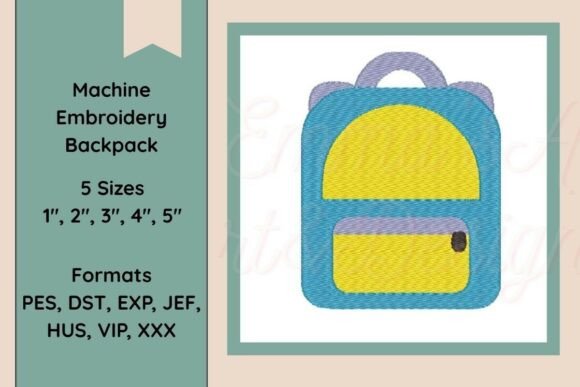
At the core of any successful embroidery project is the digitization quality. The design in question is characterized by a clean filled stitch style, which is crucial for items that will undergo frequent washing and wear, such as children’s clothing and school bags. Filled stitches generally offer better coverage and durability compared to outline-only designs, ensuring that the graphic remains vibrant even after multiple laundering cycles. This particular design features a child’s backpack motif, utilizing simple geometric shapes and bright color palettes. Such simplicity is not merely an aesthetic choice; it reduces thread consumption and minimizes the risk of puckering on thin nylon or polyester fabrics commonly used in backpack manufacturing.
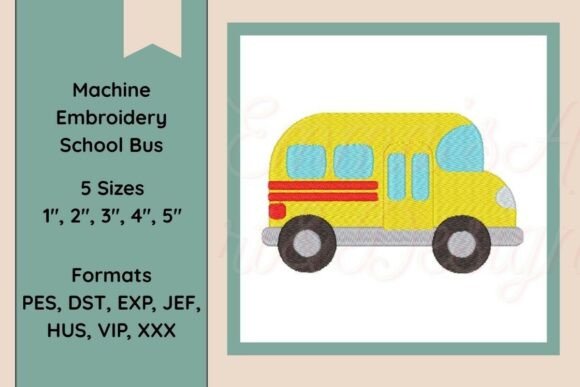
One of the most significant advantages of this digital asset is its multi-size capability. It is provided in five distinct sizes, ranging from 1 inch to 5 inches. This flexibility allows creators to adapt the design to various product categories without needing to purchase separate files for each application. For instance, a 5-inch version might be ideal for the front panel of a large daypack, while a 1-inch iteration could serve as a subtle accent on a lunch tote or a keychain accessory. The dimensions for the largest size are approximately 5 inches by 3.89 inches (127 mm x 98.806 mm), containing 22,541 stitches. In contrast, the smallest size measures 1 inch by 0.80 inch (25.4 mm x 20.32 mm) with 2,161 stitches. Understanding these stitch counts is vital for estimating production time and thread costs, particularly when scaling up for bulk orders.
Technical Compatibility and Workflow Integration
For professionals operating in the embroidery space, file format compatibility is a non-negotiable requirement. Modern embroidery machines are proprietary ecosystems, and using the wrong file type can halt production entirely. This design addresses this common pain point by including support for seven major industry-standard formats: PES, DST, EXP, JEF, HUS, VIP, and XXX. This broad compatibility ensures that users of Brother, Tajima, Janome, Husqvarna Viking, Bernina, and other major brands can utilize the design without resorting to costly conversion services or risking data corruption during translation.
The inclusion of such a wide range of formats suggests a high level of attention to detail from the designer. Often, smaller vendors provide only one or two formats, forcing users to rely on third-party converters that may alter stitch paths or density. By providing native files for the primary market players, this resource streamlines the workflow. Users can import the file directly into their machine’s software, perform necessary adjustments for specific fabric types, and begin stitching immediately. This instant digital download model further enhances its utility for entrepreneurs who need to fulfill custom orders rapidly, reducing lead times between order placement and delivery.
Practical Applications and Use Cases
The versatility of this Machine Embroidery Backpack Design extends beyond simple decoration. Its thematic focus on school supplies makes it particularly relevant for seasonal markets, such as back-to-school shopping periods. Creators can leverage this design to produce personalized gifts for teachers, students, and parents. The bright stitching and playful imagery resonate well with younger audiences, making it an effective tool for capturing the attention of children and their caregivers.
- Children’s Clothing: The design can be applied to denim jackets, hoodies, or t-shirts worn by kids. The filled stitch style provides enough texture and visual weight to stand out against cotton blends.
- School Bags and Lunch Totes: As noted in the specifications, this is a primary use case. Applying the design to canvas or nylon backpacks adds a professional touch to otherwise generic items. The 5-inch size is optimal for visibility on larger bags.
- Nursery Decor: Beyond apparel, the design can be stitched onto wall hangings or fabric bins for nursery organization. The soft colors and simple shapes align well with modern nursery aesthetics.
- Personalized Gifts: During holidays or birthdays, customized backpacks featuring this design can serve as memorable gifts. The ability to scale the design allows for variations in branding or monogramming alongside the graphic.
Evaluating Quality and Long-Term Value
When assessing the long-term value of an embroidery design, consistency and reliability are key metrics. A poorly digitized design may result in excessive jump stitches, thread breaks, or misaligned elements, leading to wasted materials and frustrated operators. The description of this design as having a "clean filled stitch style" implies a well-optimized underlay and topstitch structure. Clean digitization typically means fewer trims, smoother transitions between color changes, and consistent tension across different fabric weights.
Furthermore, the inclusion of metric measurements alongside imperial units (inches and millimeters) indicates a global audience consideration. This is particularly useful for international sellers or those working with suppliers who operate in metric systems. The precise stitch counts also allow for accurate cost modeling. For example, knowing that the 5-inch design requires over 22,000 stitches helps a business owner calculate the exact thread usage per unit, enabling more accurate pricing strategies and profit margin analysis.
Potential Limitations and Considerations
While the design offers numerous advantages, users should remain aware of certain limitations inherent to machine embroidery on flexible substrates like backpacks. Nylon and polyester fabrics can be slippery and prone to shifting during the embroidery process. To mitigate this, stabilizers are essential. Heavy-cutaway stabilizers are often recommended for backpacks to prevent distortion, especially when using larger designs like the 5-inch version. Additionally, the bright stitching may show dirt or wear more quickly than darker threads, which could be a consideration for products marketed for rugged outdoor use rather than casual school wear.
Another factor to consider is the complexity of the motif. While the design is described as having simple shapes, the filled nature of the stitches means that dense areas may create stiffness in the fabric. On thin backpack materials, this could affect comfort if placed directly against the wearer’s back. Therefore, strategic placement—such as on the front pocket or side panels—is advisable to maintain both aesthetic appeal and user comfort.
Conclusion
The decision to incorporate a Machine Embroidery Backpack Design into your creative workflow depends on your specific needs for customization, efficiency, and market appeal. This particular design stands out due to its comprehensive format support, scalable sizing options, and durable stitch structure. It is well-suited for professionals seeking a reliable asset for back-to-school campaigns, personalized gift businesses, or educational workshops. By offering seven file formats and five sizes, it reduces technical barriers and maximizes creative flexibility. For those looking to add a touch of color and personality to school-themed projects, this design provides a solid foundation for producing high-quality, commercially viable embroidered goods.