School Supplies Embroidery Patch Set
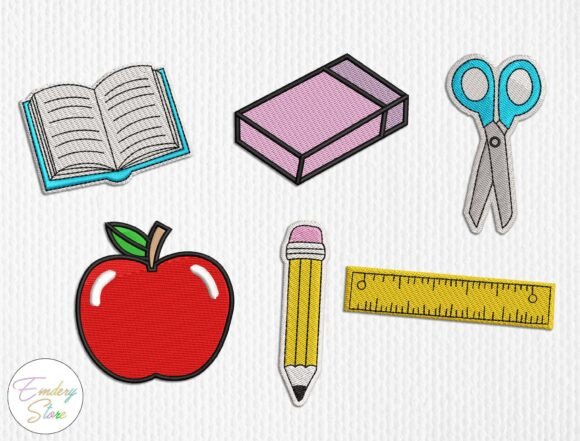
The integration of custom embroidery into personal and commercial projects requires more than just a machine and thread; it demands strategic planning, file compatibility checks, and a clear understanding of the end-use environment. For creators, educators, and small business owners looking to add a tactile, personalized touch to textiles, digital embroidery files offer a scalable solution. Among these assets, the School Supplies Embroidery Patch Set stands out as a versatile collection designed for both functional utility and aesthetic appeal. This bundle features stitched designs of an open book, eraser, scissors, apple, pencil, and ruler, digitized in a clean embroidered patch style with bold borders and smooth fill stitches.
Unlike complex pictorial designs that require extensive time on the machine and high-thread-count fabrics, this set is engineered for efficiency. The simple, friendly style makes these patches easy to stitch, reducing the likelihood of errors during execution. Whether you are preparing for a back-to-school season rush, creating classroom rewards, or developing a line of educational merchandise, understanding how to integrate these digital assets into your workflow can significantly enhance output quality and consistency.
Understanding the Asset: Format Compatibility and Technical Specifications
Before initiating any embroidery project, the first critical step is verifying technical compatibility. Digital embroidery files are not universal; they are proprietary formats specific to different machine brands. The inclusion of multiple formats in this bundle—DST, PES, JEF, EXP, VP3, HUS, XXX, EMD—covers the vast majority of home and industrial embroidery machines on the market. This multi-format approach eliminates the need for third-party conversion software, which can sometimes alter stitch paths or density, leading to suboptimal results.
- PES (Brother): Ideal for Brother users, widely used in home sewing circles.
- DST (Zoller): A standard format for industrial machines, ensuring robust stitch data.
- JEF (Janome/Machine Art): Common in Janome and some Husqvarna Viking models.
- HUS (Husqvarna/Viking): Specifically optimized for Viking and Husqvarna systems.
For professionals managing mixed fleets of equipment, having access to all these formats ensures that a design ordered once can be deployed across any station in the workshop without bottlenecking production. It also facilitates collaboration; if a freelancer needs to send a file to a local print shop using a different machine brand, the correct native format is already available.
Workflow Integration: From Design to Final Product
Incorporating the School Supplies Embroidery Patch Set into a workflow involves several stages: preparation, digitization review, material selection, stitching, and finishing. Each stage presents opportunities for optimization.
Preparation and Hooping Strategy
The description notes that these designs are suitable for small hoop sizes. This is a significant advantage for productivity. Smaller hoops mean less time spent re-hooping large garments like hoodies or tote bags. They also allow for precise placement on smaller items such as pencil cases, name tags, or the pockets of children’s clothing. When planning a batch order, grouping items by hoop size can streamline the setup process. For instance, if you are producing fifty student ID holders, all requiring the same "open book" patch, you can prepare a multi-stitch sequence or use a cutting plotter to mark hooping points, reducing manual measurement errors.
Material Selection and Stability
Embroidery interacts dynamically with fabric. Smooth fill stitches and bold satin borders, as featured in this set, perform best on stable, medium-weight fabrics. Cotton blends, denim, and canvas are ideal candidates. However, when working with stretchy materials like polyester fleece or thin nylon backpacks, stability becomes paramount. Using the correct stabilizer is not optional; it is a quality control measure.
For lightweight fabrics, a tear-away stabilizer may suffice, but for heavier items like backpacks, a cut-away stabilizer provides long-term durability. The "bold borders" mentioned in the product description help frame the design, but they also create tension. If the fabric shifts during stitching, the satin border may pucker. Pre-testing a single patch on a scrap piece of the target material allows you to adjust thread tension and stabilizer type before committing to the full run.
Strategic Use Cases Across Different Sectors
The versatility of the School Supplies Embroidery Patch Set extends beyond simple decoration. Its thematic relevance to education and organization makes it a powerful tool for branding, motivation, and identity management.
Educational Environments and Classroom Management
For teachers and school administrators, these patches serve as effective behavioral and organizational tools. Instead of printing names on labels that fade or peel, embroidered patches offer permanence. Attaching a "pencil" or "eraser" patch to a student’s designated cubby or supply bin creates a visual cue that aids early learners in identifying their belongings. This reduces lost-and-found clutter and fosters a sense of ownership among students.
Furthermore, these patches can be used as tangible rewards. A teacher might award a completed "scissors" or "apple" patch to a student who demonstrates exceptional focus or creativity. The physical nature of the reward reinforces positive behavior more effectively than verbal praise alone. In this context, the patch is not just a decorative element; it is a component of a behavioral management system.
Small Business and Entrepreneurial Applications
Entrepreneurs selling handmade goods or educational kits can leverage this set to increase perceived value. A plain canvas tote bag becomes a premium "Back-to-School Kit" when adorned with a cohesive set of these patches. The clean, modern aesthetic aligns well with current trends in minimalist and functional design. By bundling the patches with other items—such as notebooks, pens, or stickers—you create a higher-margin product package.
Additionally, these designs are excellent for corporate gifting in the education sector. Schools, tutoring centers, or educational tech companies can commission bulk orders of branded apparel featuring these motifs alongside their logo. The familiarity of the symbols (book, apple, ruler) communicates the industry instantly, while the embroidery adds a layer of craftsmanship that distinguishes the gift from mass-produced promotional items.
Personal Projects and Hobbyist Workflows
For hobbyists and parents, the ease of use is the primary driver. The "beginner-friendly" nature of these files means that even those new to machine embroidery can achieve professional-looking results. This lowers the barrier to entry for creating personalized gifts. A parent can quickly embroider a set of patches onto a child’s backpack, adding a personal touch that mass-market retailers cannot replicate. The process is straightforward: load the appropriate file format, select the thread colors, attach the stabilizer, and start the machine. The result is a durable, washable customization that survives daily wear and tear.
Quality Control and Long-Term Maintenance
Once the embroidery is complete, the workflow does not end. Quality control involves inspecting the stitches for skipped loops, tight tension, or fabric distortion. Because these designs feature smooth fill stitches, any inconsistencies in thread tension will be highly visible. Regular maintenance of the embroidery machine, including cleaning lint from the bobbin area and replacing needles every 8–10 hours of use, ensures consistent stitch quality.
For end-users, care instructions are vital. While embroidery is durable, improper washing can damage the threads or cause shrinkage in the base fabric, distorting the patch. Advising clients or students to wash embroidered items inside-out on a gentle cycle and air dry them extends the lifespan of the work. This attention to detail reinforces the value of the final product and minimizes returns or complaints in a commercial setting.
Conclusion
The School Supplies Embroidery Patch Set is more than a collection of digital files; it is a toolkit for efficient textile customization. By offering broad format compatibility, beginner-friendly designs, and strong thematic relevance, it supports a wide range of workflows from classroom management to small business inventory. Success with this asset depends on proper preparation, material matching, and attention to technical details like stabilizers and needle types. When integrated thoughtfully into a broader creative or operational process, these patches provide a durable, professional, and visually appealing solution for anyone looking to personalize or brand textile products.