Evaluating Leader College: A Practical Guide to Fonts That Bridge Creativity and Literacy
In the landscape of educational design, few elements are as foundational yet overlooked as typography. For adults—whether they are parents, educators, or curriculum designers—the choice of font is rarely just an aesthetic decision; it is a pedagogical one. When exploring resources that support early literacy, particularly for young learners transitioning into structured education, Leader College emerges as a distinct option worth evaluating. It is not merely a typeface but a functional tool designed to inspire creativity while reinforcing the mechanics of English letter formation.
This analysis examines what makes Leader College unique, how it compares to standard educational fonts, and who benefits most from its specific design philosophy. By understanding its strengths and limitations, you can determine if this resource aligns with your goals for fostering both artistic expression and linguistic competence.
Understanding the Design Philosophy of Leader College
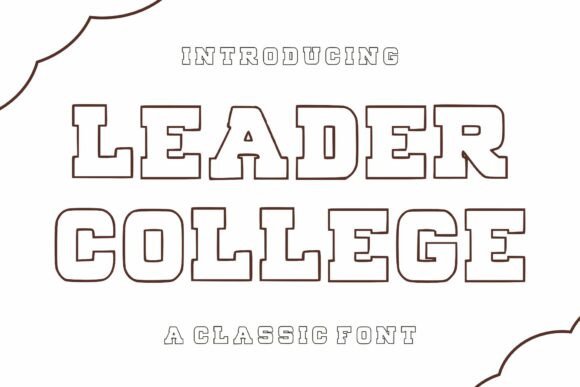
At its core, Leader College is classified as a "college classic" font, but this label understates its practical application in early childhood education. The typeface was engineered with clean, easy-to-recognize shapes that prioritize legibility without sacrificing charm. Unlike highly stylized display fonts that may distract from content, Leader College strikes a balance between readability and engagement. Its open-ended design invites interaction, making it suitable for hands-on activities that go beyond simple reading.
The font’s primary distinction lies in its dual purpose: it serves as a visual aid for mastering letter recognition while simultaneously acting as a canvas for creative exploration. The letters are constructed with clear boundaries and consistent proportions, which helps children visualize the correct formation of each character. This structural clarity is crucial for developing fine motor skills and hand-eye coordination, as learners can easily trace, copy, or manipulate the shapes.
Furthermore, the aesthetic quality of Leader College encourages imagination. Because the letters are presented in a way that feels approachable rather than rigid, children are more likely to engage with them through various mediums. Whether used in digital presentations or printed worksheets, the font maintains a friendly tone that reduces anxiety around learning new concepts. This psychological comfort is a significant factor in effective pedagogy, as it allows students to focus on the task at hand rather than being intimidated by complex or unfamiliar visual stimuli.
Comparing Leader College to Standard Educational Typefaces
When evaluating educational resources, it is essential to compare them against established alternatives. Most traditional school fonts, such as Arial, Times New Roman, or specialized dyslexia-friendly typefaces, prioritize uniformity and speed of reading. While these fonts are excellent for fluency, they often lack the playful nuance required to sustain a child’s interest during formative years. Leader College differentiates itself by integrating elements of playfulness into its structural integrity.
- Legibility vs. Engagement: Standard sans-serif fonts excel in clarity but can appear sterile. Leader College retains high legibility but adds subtle variations in stroke weight and shape that make each letter feel like a distinct object. This distinction helps children memorize letter forms more effectively because each character has a unique visual identity.
- Static vs. Interactive Design: Many fonts are designed solely for consumption. In contrast, Leader College is designed for manipulation. Its open-ended shapes are ideal for cutting out, gluing, and rearranging. This interactivity transforms passive reading into active learning, allowing children to physically construct words and sentences.
- Uniformity vs. Expressiveness: While some educational tools enforce strict uniformity to ensure consistency, Leader College allows for slight interpretive flexibility. This flexibility supports creative tasks like coloring and painting, where the goal is not just accuracy but personal expression within a structured framework.
However, this comparison reveals a tradeoff. Leader College may not be the optimal choice for older students or advanced readers who require dense, information-heavy text. Its playful nature might become distracting in contexts where speed and efficiency are paramount. Therefore, it is best suited for early elementary levels, special education settings, or any environment where the integration of art and language is a priority.
Practical Applications and Use Cases
The versatility of Leader College extends across multiple domains of early education. Its design facilitates a wide range of activities that promote holistic development. Below are several practical scenarios where this font proves particularly valuable.
Craft-Based Learning
One of the standout features of Leader College is its suitability for tactile learning. Teachers and parents can print large versions of the letters for cutting and pasting activities. Children can create collages using magazine cutouts, fabric scraps, or painted paper, arranging the pieces to spell their names or simple words. This process reinforces letter recognition while developing scissor skills and spatial awareness. The clean lines of the font ensure that even when cut roughly, the letters remain identifiable, reducing frustration for young learners.
Coloring and Art Integration
For art-integrated lesson plans, Leader College offers a blank slate that is both structured and inviting. Unlike overly ornate fonts that leave little room for color, the bold, open shapes of Leader College allow children to experiment with shading, patterns, and gradients. Educators can use these sheets to teach color theory alongside vocabulary building. For instance, a lesson on emotions could involve coloring the word "happy" in bright yellows and oranges, linking linguistic meaning with visual association.
Digital and Print Consistency
In hybrid learning environments, consistency across platforms is key. Leader College performs well in both digital displays and printed materials. Its scalable vector graphics ensure that the font remains crisp whether viewed on a tablet screen or projected onto a classroom whiteboard. This consistency helps reinforce learning outcomes, as children encounter the same visual cues regardless of the medium. Additionally, the font’s compatibility with common document formats makes it accessible for remote learning resources, allowing parents to replicate classroom activities at home.
Evaluating Tradeoffs and Limitations
No single resource is a panacea, and Leader College has specific limitations that users should consider before adopting it as a primary teaching tool. Understanding these constraints ensures a more informed decision-making process.
First, the font’s emphasis on creativity may not align with standardized testing preparations. If the goal is rapid decoding and reading fluency for older children, a more conventional typeface might yield better results. The playful elements, while engaging, can sometimes slow down the reading process for beginners who are still struggling with basic phonics.
Second, availability and licensing can be a hurdle. As a specialized educational font, Leader College may not be pre-installed on all devices, requiring users to download and install it manually. This additional step can be a barrier for time-constrained educators or parents who need immediate access to materials. Furthermore, commercial use may require specific licensing agreements, so institutions must verify usage rights before incorporating the font into paid curricula or published materials.
Finally, the font’s effectiveness relies heavily on proper implementation. Simply printing text in Leader College does not guarantee improved learning outcomes. It must be paired with intentional instructional strategies that leverage its interactive potential. Without guided activities, the font’s unique features may go underutilized, rendering it no more effective than a standard typeface.
Decision Factors: Is Leader College Right for You?
Choosing the right educational resource depends on your specific objectives and audience. Leader College is an excellent fit for the following scenarios:
- Early Childhood Education: If you are working with children aged 4–8 who are just beginning to recognize letters, the font’s clear shapes and playful design can significantly boost engagement and retention.
- Special Needs Support: For students with attention deficits or learning disabilities, the distinct visual characteristics of Leader College can help differentiate letters that might otherwise look similar in other fonts (such as 'b' and 'd').
- Creative Curriculum Development: If your program emphasizes arts integration, project-based learning, or hands-on activities, Leader College provides a versatile foundation for these interdisciplinary approaches.
Conversely, you might want to explore alternative options if:
- Your primary focus is on advanced reading fluency or academic writing for older students.
- You need a font that is universally available without installation requirements.
- Your budget constraints limit access to specialized or licensed typefaces.
Conclusion
Leader College represents a thoughtful intersection of design and pedagogy. By combining the structural clarity needed for literacy with the openness required for creativity, it offers a unique value proposition for educators and parents alike. While it may not replace standard fonts in every context, its ability to transform letter formation into an engaging, multi-sensory experience makes it a powerful tool in the right hands.
Ultimately, the decision to use Leader College should be driven by the needs of the learner and the goals of the educator. When used strategically, it can enhance the learning journey, turning the mundane task of mastering English letters into an adventure of discovery and self-expression. For those willing to invest the time in leveraging its full potential, Leader College stands as a compelling choice in the quest to inspire the next generation of readers and creators.