Bringing Whimsy to the Classroom: A Deep Dive into Clowning Around School Dingbats
The modern educational landscape is undergoing a subtle but significant transformation. As digital interfaces become more immersive and visual communication takes precedence over dense text, educators and content creators are seeking tools that bridge the gap between rigorous academic standards and engaging, student-friendly aesthetics. In this context, typography and iconography play a pivotal role in shaping how information is received. Among the various design resources available, Clowning Around School Dingbats stands out as a specialized asset designed to inject personality, humor, and creative encouragement into educational layouts.
This unique dingbat font does more than simply replace standard characters or icons; it reinterprets classic school supplies through a whimsical lens. By transforming mundane objects like glue bottles, rulers, and notebooks into cheerful, hand-drawn figures, this resource offers a fresh perspective on classroom branding and material design. For professionals ranging from curriculum developers to independent teachers, understanding the strategic application of such playful design elements can significantly enhance user engagement and learning outcomes.
The Anatomy of Educational Playfulness
To understand the value of Clowning Around School Dingbats, one must first appreciate the psychology behind visual learning aids. Children, and indeed many adult learners, respond positively to environments that feel safe, inviting, and slightly unconventional. The "clown" motif, often associated with joy and lightheartedness, serves as an emotional anchor in these designs. It signals to the viewer that the material they are about to engage with is approachable and fun, reducing the anxiety often associated with new or difficult subjects.
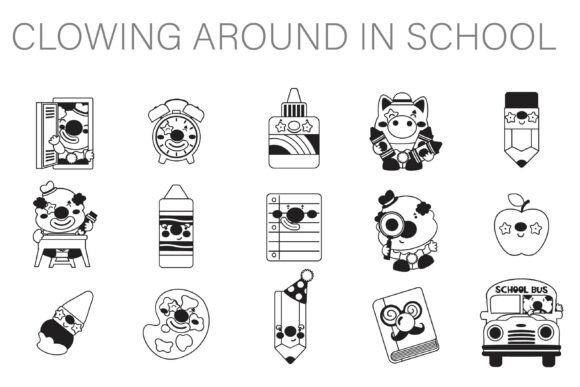
The font set achieves this by infusing every icon with a distinct personality. Consider the alarm clock, typically a symbol of urgency and routine. In this collection, the alarm clock features a clown face, softening its authoritative presence and turning it into a character rather than just a timekeeping device. Similarly, pencils are depicted wearing party hats, suggesting that writing and creation are celebrations rather than chores. This semantic shift in visual language helps to reframe the student’s relationship with their tools.
- Personification of Objects: Inanimate school items are given facial expressions and accessories, making them relatable characters.
- Hand-Drawn Aesthetic: The artisanal quality of the lines suggests human effort and care, contrasting with sterile corporate graphics.
- Color Palette Potential: While the dingbat itself may be monochrome for printing versatility, its design invites vibrant coloration in final applications.
Practical Applications in Modern Education
The versatility of Clowning Around School Dingbats extends across a wide spectrum of educational materials. Its utility is not limited to primary education; the charm of the design appeals to a broad audience, including hobbyists who enjoy scrapbooking lesson plans or business owners creating training materials that require a friendly tone.
Teacher Resources and Lesson Planning
For teachers, the daily grind involves creating hundreds of worksheets, labels, and instructional guides. Using a standard icon library can make these materials feel generic. By integrating dingbats that feature silly friends driving school buses or notebooks with expressive covers, educators can create a cohesive "brand" for their classroom. This consistency helps students navigate their learning environment with ease and familiarity. For instance, a worksheet header featuring a ruler holding a sign can immediately signal a math activity without needing extensive text instructions.
Back-to-School Marketing and Flyers
The beginning of the academic year is a critical time for community engagement. Schools and tutoring centers rely on flyers and social media graphics to attract attention. Standard fonts often blend into the noise of digital feeds. However, a flyer utilizing Clowning Around School Dingbats commands attention through its novelty. The juxtaposition of professional information with whimsical imagery creates a memorable impression. Parents and students are more likely to remember a school that presents itself with creativity and warmth.
Library Branding and Spatial Design
School libraries are sanctuaries of curiosity. Branding these spaces effectively encourages exploration. Signage directing students to different sections—such as "Fiction," "Reference," or "Quiet Study"—can be enhanced with dingbats that reflect the nature of each area. A bookshelf might be labeled with a happy book character, while a quiet zone could feature a sleeping cat or a thoughtful owl made from school supplies. This environmental storytelling supports wayfinding and reinforces the library's identity as a place of adventure.
Benefits for Content Creators and Educators
Beyond aesthetic appeal, there are tangible benefits to incorporating these specific dingbats into your workflow. The design philosophy behind Clowning Around School Dingbats aligns with several key pedagogical and practical goals.
- Enhanced Retention Through Association: Visual mnemonics help learners retain information. When a specific icon is consistently paired with a concept (e.g., a pencil in a party hat representing "creative writing"), students form stronger neural associations.
- Reduced Cognitive Load: Clear, distinctive icons allow users to process information faster than reading dense text. A well-designed dingbat acts as a visual shorthand, guiding the eye and organizing content intuitively.
- Cultural Inclusivity: Humor and play are universal languages. By avoiding overly specific cultural references in favor of general whimsy, these designs remain accessible to diverse student populations.
- Customization Flexibility: As vector-based or high-resolution assets, these dingbats can be scaled and recolored to fit any brand guideline, ensuring they work equally well on a small worksheet or a large banner.
Implementation Strategies for Maximum Impact
Integrating Clowning Around School Dingbats into existing projects requires thoughtful consideration. It is not merely about pasting icons onto a page; it is about creating a harmonious visual narrative. Here are some strategies to ensure effective implementation.
Consistency in Tone
When using these dingbats, the surrounding typography should complement the whimsical nature of the icons. Pairing them with clean, sans-serif fonts ensures readability while allowing the dingbats to serve as focal points. Avoid mixing overly ornate or serious serif fonts unless intentional contrast is desired for dramatic effect. The goal is to maintain a balance where the humor enhances the message rather than distracting from it.
Strategic Placement
Not every element needs a dingbat. Overuse can lead to visual clutter, which defeats the purpose of clear communication. Instead, use these icons strategically to highlight key actions or categories. For example, use a glue bottle icon to denote "crafting" sections or a bus icon for "field trip" notices. This selective usage draws attention to important information and makes the layout easier to scan.
Contextual Relevance
Ensure that the chosen dingbat matches the context of the content. Using a chaotic, messy pile of books for a section on "organization" would create cognitive dissonance. Conversely, using a neat stack of notebooks with smiling faces reinforces the idea of order and readiness. Always consider the emotional resonance of the image in relation to the text it accompanies.
Considerations for Professional Use
While the playful nature of Clowning Around School Dingbats is a strength, it is important to recognize contexts where a more formal approach might be necessary. In highly technical or sensitive educational materials, such as advanced scientific diagrams or disciplinary guidelines, excessive whimsy may undermine the seriousness of the content. In these cases, designers should exercise discretion, perhaps using only the most neutral icons from the set or reserving the full range of personalities for introductory or motivational segments.
Furthermore, accessibility remains a paramount concern. Ensure that all icons are accompanied by descriptive alt text for screen readers. The visual charm of a clown-faced alarm clock is lost on visually impaired users if not properly described. Providing alternative text that explains the function of the icon (e.g., "Icon: Alarm Clock") maintains inclusivity while preserving the artistic integrity of the design.
The Future of Playful Learning Design
As education continues to evolve, the line between entertainment and instruction will blur further. Gamification, interactive media, and dynamic visuals are becoming standard expectations for digital learning platforms. Resources like Clowning Around School Dingbats prepare educators and designers for this future by emphasizing engagement and emotional connection. They remind us that learning is not just a cognitive process but a human experience enriched by joy and creativity.
The trend toward "edutainment" favors materials that respect the learner's intelligence while appealing to their sense of wonder. By adopting design systems that incorporate humor and personality, institutions can foster a culture of curiosity. Students who feel welcomed and amused by their learning materials are more likely to participate actively, collaborate with peers, and develop a lifelong love for learning.
Conclusion
In summary, Clowning Around School Dingbats represents more than just a decorative font; it is a tool for enhancing communication and fostering positive educational experiences. By reimagining familiar school supplies as charming characters, it brings a touch of humor and artisanal fun to every layout. Whether used for teacher resources, back-to-school flyers, or playful library branding, this dingbat set offers a unique way to connect with audiences on a deeper level. For anyone looking to make learning an adventure, integrating these whimsical elements into their design workflow is a step toward creating more engaging, memorable, and effective educational content.